



What the Chicken Road 2.0 methodology covers
Game version and configuration
InOut Games makes the game, and the operator controls access, the account, the cashier and identity checks. Chicken Road is the publication run by Michał Kowalski. Its role here is to explain how the game works and compare evidence. When a third-party catalogue supplies a rating or lists a game, that observation stays with the catalogue. IOGr B.V. holds Anjouan licence ALSI-202506032-FI2 in its capacity as a B2B game supplier.
The game mode is chicken-road-two. Easy, Medium, Hard and Hardcore have 30, 25, 22 and 18 lanes in Chicken Road 2.0, compared with 24, 22, 20 and 15 in Chicken Road, the original game. The label Game rules 1.0.0 identifies the rules component in the game client. A rules-component label and a product edition answer different questions about what is on screen.
One accepted stake starts a round. Each safe move gives you the choice to continue with Go or to request Cash out at the available multiplier. A collision before the cash-out request is confirmed closes play at that lane and pays nothing. The history record shows whether the server settled the round or voided it.
The Chicken Road 2.0 methodology keeps the RTP profile attached to the configuration. The active demo profile had 95.5% RTP. The separate 97% and 98% configurations have different multiplier tables. Choosing a difficulty within one profile changes the lanes and multiplier path. The demo allowed stakes from USD 0.12 to USD 200 and capped the payout at USD 20,000 per paid round. A Polish operator wallet can have its own limits and currency.
Operator routes and evidence
The Chicken Road 2.0 testing methodology uses provider rules to explain what the game is designed to do, displayed conditions to identify the operator's stated terms, and round or payment records to establish what happened in an episode. A payout offered on the screen is a useful interface observation. For example, the Finnish Stake demo displayed USD 4.38 at USD 3 × 1.46. The demonstration amount was available at that step, and only a settled history entry would establish the round outcome.
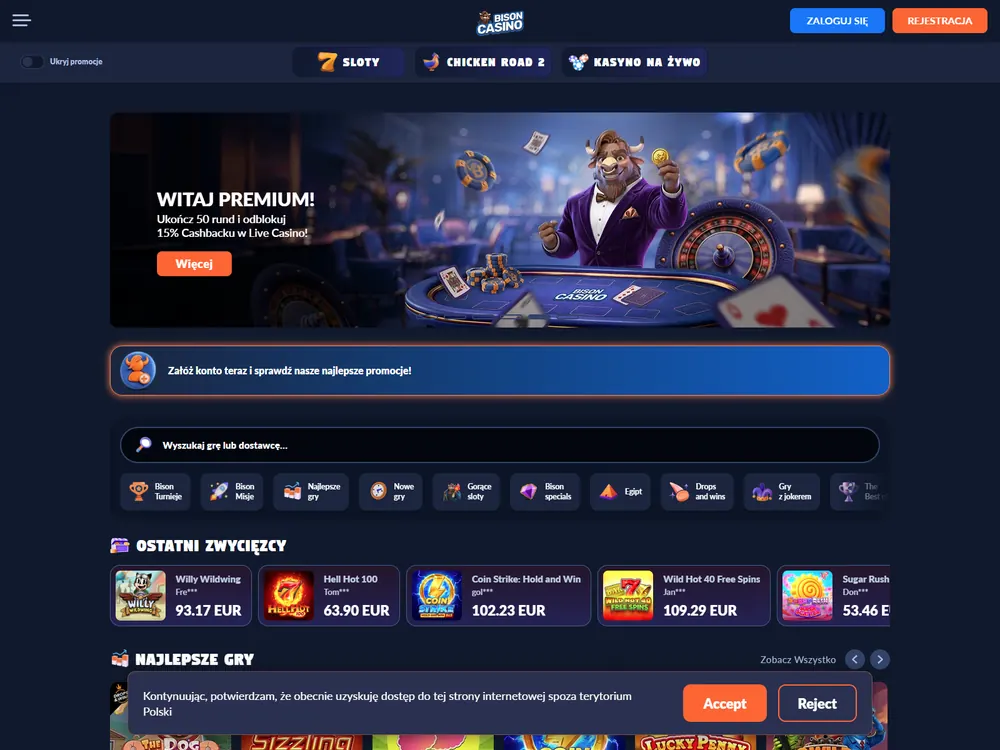
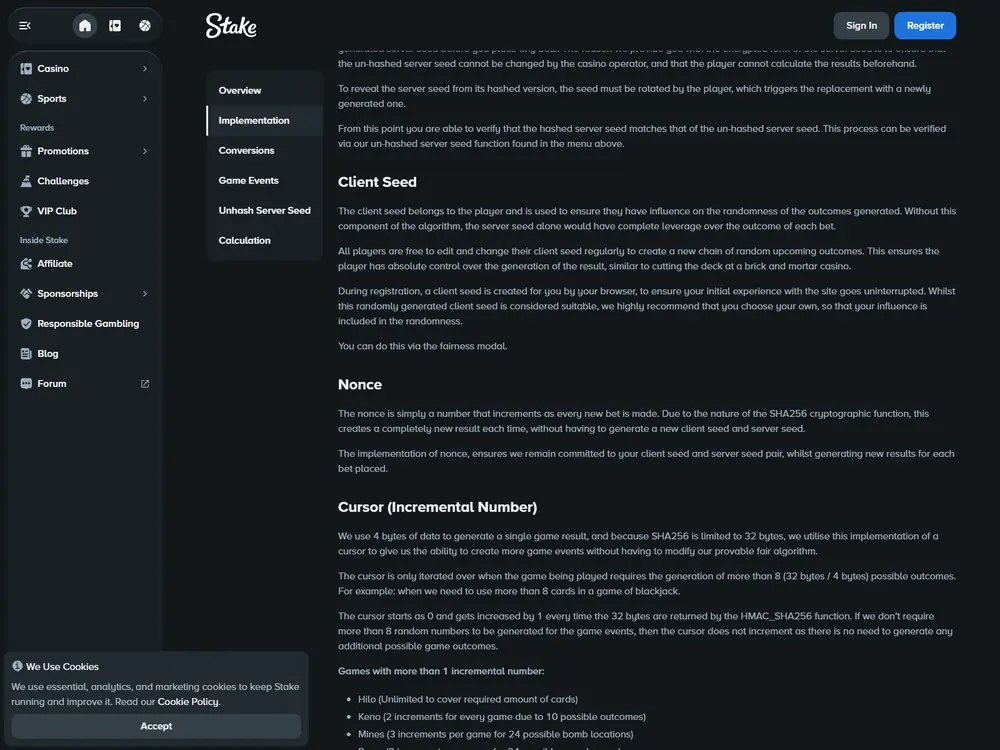
The Polish test profiles include Mostbet, NV Casino, Total Casino and Ice Casino. The other two profiles, Bison Casino and Stake, ended at eligibility. The 22bet and Bitguruz episodes belong to Finland. The Finnish Stake demo shows a virtual game route in that context. Stake's terms exclude Poland, and Bison Casino's Polish eligibility check stops the cash route. An account screen, a catalogue listing and permission to place a cash bet are separate observations.
How we reconcile bets, balances and withdrawals
Accepted, settled and void bets
Start with what the server accepted. An accepted stake can settle with a payout, settle at zero after a collision, or be voided. Settled turnover T adds the stakes that reached settlement. Gross payout G totals everything those rounds paid, counting a settled loss as zero. The net game result is G − T. Divide G by T to obtain the observed return, and track the number of paying rounds as a separate measure.
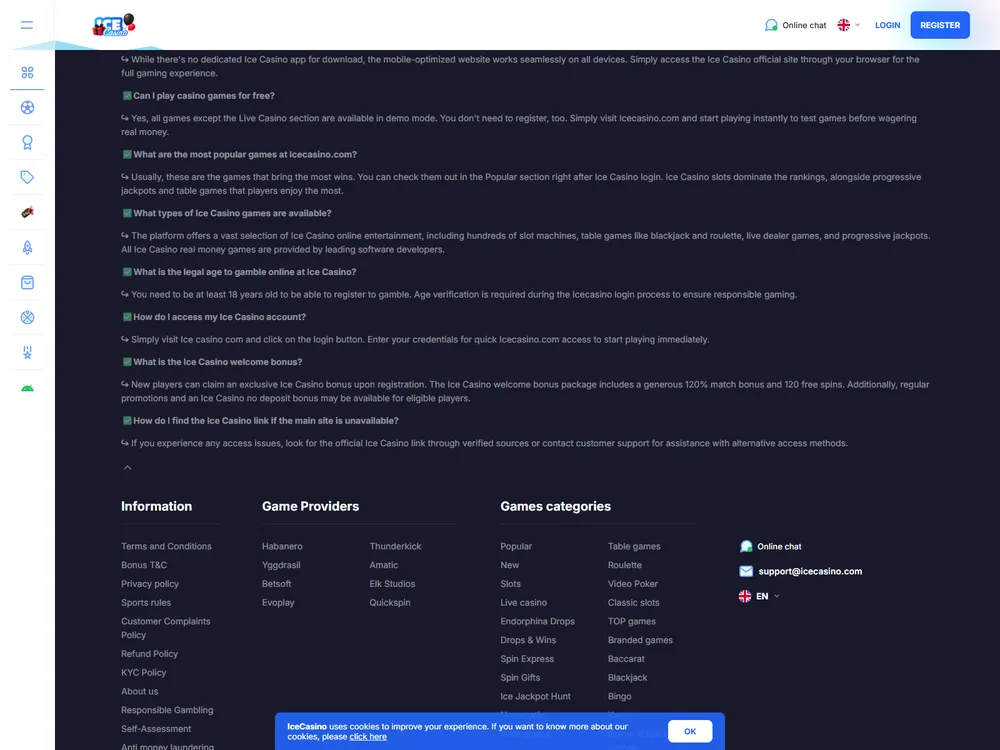
My session at Ice Casino disconnected with a stake of 4.60 PLN already accepted. After reopening the history, I found a void and matched it to the 4.60 PLN return. A duplicate display disappeared after the history refreshed, and the wallet showed one return. That leaves five settled bets out of six accepted. The returned stake stays in the reconciliation record and outside settled turnover and gross payout.
| Operator and market | Settled / accepted | With payout | Turnover T | Gross payout G | Net | Observed G/T |
|---|---|---|---|---|---|---|
| NV Casino, Poland | 6/6 | 4 | 22.37 PLN | 33.28 PLN | +10.91 PLN | 148.77% |
| Total Casino, Poland | 5/5 | 4 | 22.50 PLN | 27.51 PLN | +5.01 PLN | 122.27% |
| Ice Casino, Poland | 5/6 | 3 | 30.19 PLN | 40.91 PLN | +10.72 PLN | 135.51% |
| Mostbet, Poland | 7/7 | 6 | 60.55 EUR | 113.29 EUR | +52.74 EUR | 187.10% |
| 22bet, Finland | 5/5 | 3 | 18.76 EUR | 20.74 EUR | +1.98 EUR | 110.55% |
| Bitguruz, Finland | 6/6 | 5 | 19.47 EUR | 30.06 EUR | +10.59 EUR | 154.39% |
At NV Casino four out of six settled rounds paid something. Applying a 95% Wilson interval to the payout frequency gave a range of 30.00% to 90.32%. The interval is wide because the sample is small, and it concerns payout frequency. The 148.77% in the table uses total payout divided by total stake. Both measures describe that short sequence of rounds, while the configured 95.5% RTP is a parameter of the long-run model.
From game cash out to money received
In a Polish NV Casino round, I matched a 3.55 PLN accepted stake to a second safe Hard lane and a confirmed 1.46× cash out. The settled payout was 5.18 PLN, which appeared in the in-game wallet 16 seconds after the stake was accepted. This is the point at which the game round and its balance reconcile. An external withdrawal has four stages. Record the request, check its approval, then distinguish dispatch from receipt.
At Ice Casino, the wallet showed a withdrawal of 106.82 PLN, and 106.30 PLN reached the receiving wallet after the intermediary deducted 0.52 PLN. For this Mostbet withdrawal, the card form fixed the rate at 4.250 PLN per EUR when the withdrawal was confirmed. Multiplying the 103.29 EUR request by that rate gives 438.98 PLN after rounding, matching the amount received. To keep that comparison meaningful, record the requested amount in the game wallet's currency and the receipt in the currency actually delivered. The operator fee, intermediary fee and conversion belong to the corresponding payment stages.
If you need to reconcile a round after a disconnect, use the transaction state and wallet movement together.
- Open the round history and match the accepted stake to its round entry.
- Check whether it settled, voided or still shows as open.
- Compare the credited payout or returned stake with the wallet movement. If the entry appears twice, check whether the wallet changed twice.
Stake and Bison Casino illustrate a different endpoint. The operator records show 63.00 PLN and 79.15 PLN under reconciliation, respectively, after access stopped. Those amounts remain payment entries. The game sample includes only accepted game bets.
Where to play Chicken Road 2.0
Compare six operator profiles. The scores reflect the routes tested for Chicken Road 2.0. Check authorisation in Poland and your account’s eligibility before depositing.
NV Casino

Cash test in PLN
- All 6 accepted rounds settled.
- Tested Visa deposit limits were 45.50–800 PLN.
- Withdrawals to a personal Visa started at 50 PLN.
Stake

Poland restriction
- Terms §14.3 exclude Poland.
- No cash bets were accepted in the Polish account.
- The 63 PLN transfer was still under review at the end of the test.
Total Casino

Signed-in PLN test
- All 5 accepted rounds settled.
- Public search found no exact InOut title.
- Tested BLIK deposit limits were 10–600 PLN.
Ice Casino

Cash test in PLN
- 5 of 6 accepted rounds settled. One was voided.
- Tested Skrill deposit limits were 40.50–700 PLN.
- The demo opened from the operator’s own game listing.
Bison Casino

Poland restriction
- The eligibility prompt required access from outside Poland.
- The virtual demo ran separately from the cash account.
- The 79.15 PLN BLIK payment was still under review at the end of the test.
Mostbet

Cash test in EUR
- All 7 accepted rounds settled in the EUR wallet.
- Standard Chicken Road 2.0 was listed as card 123628.
- Tested Mastercard deposit limits were 18.25–390 EUR.
How we time mobile launches
Cold and warm starts
The device pair was a Samsung Galaxy S25 Ultra on Android 16 with One UI 8 and an iPhone 17 Pro on iOS 26. For the desktop comparison, the Samsung ran in DeX mode with a 1440 × 900 CSS pixel viewport at 100% zoom. The main series used 5 GHz Wi-Fi. A separate recovery check switched to LTE and then back to Wi-Fi.
For a cold start, close the process and clear the session cache, then time from opening the route to usable controls. For a warm start, reopen it from memory in the same profile with the interface already loaded. Five repeats of each give a median and range for the defined endpoint. I timed NV Casino on Android in Poland. The medians were 3.46 s cold and 1.51 s warm.
Lobby, eligibility screen and playable field
The launch series stopped at the lobby or eligibility screen. A separate series started at selection of the game card and ended when Play and the field were ready, with five timings where play was available. The main launch series recorded zero loading errors. In the restricted Polish Stake and Bison Casino profiles, reaching the eligibility screen was the expected launch outcome and the cash path ended there.
What the Provably Fair checks establish
A reference vector lets you test the calculation against known inputs. Its SHA-256 commitment and full SHA-512 digest matched on recomputation. Converting the prescribed digest portion gave 0.32027416, below the vector's Hard 3 threshold of about 52.19%. That produces the vector's Hard 3 result at 1.83×.
The server-bet check used the inputs disclosed for that specific settled bet and the rules applicable to it. A displayed multiplier can agree while leaving earlier steps in the verification chain unchecked, which is why the procedure also compares the commitment and disclosed inputs. The guide to checking the result explains the interface and the scope of each check.
How we compare risk at equal turnover
What the simulations measure
The risk series ran 12,000 simulations for each of eight policies, with the same random number sequence across policies. The starting balance was 100 PLN and the horizon was 80 cycles. After each settled round, the simulation measured the net change from that starting balance and stopped at −30 PLN or lower (stop-loss) or +30 PLN or higher (take-profit). The model used Hard 3 at 1.83×, with a calculated probability of reaching it of 52.19%. Stakes and payouts used 0.01 PLN increments. The simulation checked the stop-loss before checking for insufficient funds. It capped the next stake at the available balance and stopped if that balance was below 0.50 PLN.
A fixed-stake policy averaged 153.29 PLN of turnover and a net result of −6.95 PLN. The policy that ended a run after four consecutive collisions averaged 62.12 PLN of turnover and −2.97 PLN net. The respective standard errors of the simulated mean were 0.14 PLN and 0.08 PLN. Standard error describes the precision of the estimated mean. The total staked and the distribution of session results answer different questions about exposure. The stop-loss threshold was reached in 12.43% of fixed-stake runs and 52.63% of geometric-progression runs.
Putting different games on the same base
Use the same turnover for each configuration and preserve how the game reaches its payout. A step game offers a decision after a safe lane. In a continuous crash game, the player selects when to exit. Their comparison can use the same turnover even when the events leading to a payout differ.
With a 95.50% RTP, 100 units of turnover imply an expected loss of 4.50 units before any cap adjustment. A 96.50% profile gives 3.50 units on the same base. The 1 percentage point RTP difference means 1 unit of expected loss on the same turnover. Caps can change the comparison where the calculated payout exceeds the limit. The comparison sets included nine step games and eight InOut games, with three shared titles and fourteen in their union. The third set, covering crash and related fast games, brought the total to eighteen distinct titles. The RTP and multipliers guide explains the game-specific inputs.
How we calculate and interpret scores
How the game score is calculated
The game model uses five criteria scored from 0 to 10. Each criterion has its own evidence, so an operator's approval time has no weight in how the game displays a settled round.
| Criterion | Weight | What the game check uses |
|---|---|---|
| Round control and clarity of states | 30% | Difficulty selection, Play acceptance, safe steps, confirmed cash out, collision and void states |
| Clarity of RTP and limits | 25% | The applicable RTP profile, rules window, stake range, multiplier path and payout cap |
| Reproducibility of result verification | 20% | The reference vector, commitment and digest checks, and the inputs for a verified server round |
| Compatibility and demo access | 15% | The provider demo route and observed behaviour on Android, iOS and desktop |
| Reliability of settlement and history | 10% | Agreement between accepted stakes, settlements, returns and wallet movements in the test episodes, including recovery after a disconnect |
Multiply each criterion score by its weight, divide by 100 and add the five contributions. Round the resulting game score once, to one decimal place for publication. The main Chicken Road 2.0 page gives the criterion values and the published result.
Operator-route scores
The Chicken Road 2.0 methodology scores each operator route on a separate scale from 0 to 10. Payment stages carry 25%, bonus treatment 20%, catalogue accuracy 20%, mobile access 15%, support 10% and transparency 10%. Multiply each score by its percentage weight, divide by 100 and sum the contributions. The NV Casino example uses component scores of 8, 8, 9, 9, 8 and 6 in that order. The weighted sum is 8.15, displayed as 8.2/10. All six criteria were covered in the eight profiles. Where a criterion falls outside scope, the applicable weights are rescaled. The route model uses half-up rounding to two decimal places internally. Published scores use one decimal place.
| Operator | Market | Route outcome | Route score out of 10 |
|---|---|---|---|
| NV Casino | Poland | Settled play and receipt of 95.11 PLN | 8.2 |
| Mostbet | Poland | Settled play and receipt of 438.98 PLN from an EUR-wallet withdrawal | 8.0 |
| Total Casino | Poland | Settled play and receipt of 58.26 PLN | 7.9 |
| Ice Casino | Poland | Settled play, one void, and receipt of 106.30 PLN | 7.3 |
| Bitguruz | Finland | Settled play and receipt of 61.99 EUR | 7.0 |
| 22bet | Finland | Settled play and receipt of 43.58 EUR | 6.6 |
| Bison Casino | Poland | Cash route stopped at eligibility, payment under reconciliation | 5.4 |
| Stake | Poland | Cash route stopped at eligibility, payment under reconciliation | 5.2 |
Catalogue and player ratings
Casino Guru's Guru Score is 6.1/10 for the game. The same site shows a player score of 3/10 from one review. SlotCatalog shows 8.8/10 from twelve votes. Those labels and denominators identify three different measures. The player feedback and complaints page explains how comments, ratings and individual complaint outcomes are read.
How to report a correction
Paid placement is disabled. To report an error, send the page to [email protected] and include the claim or state you are querying and the specific correction. If your example concerns an operator, include the market, currency and stage of the transaction so the correction can be applied to the right context.
FAQ
Does a short cash sample verify RTP?
A short sample shows the gross payout as a share of settled stakes in those rounds. The game configuration supplies the theoretical RTP, and the observed share can be well above or below it.
How do you count a void bet?
Count it as accepted if the server accepted it. Record the return separately and leave the void stake out of settled turnover and its return out of gross payouts.
What counts as a successful mobile start?
The timer ends at the endpoint defined for that series. A usable eligibility screen completes an access measurement. A playable launch requires the ready controls and field.
Does a Provably Fair check cover future bets?
It covers the event checked from its disclosed inputs and rules. The reference vector checks the calculation against a known result. Both checks apply to specific inputs and results.
Where can I find the overall Chicken Road 2.0 game score?
The main Chicken Road 2.0 page gives the single game score, its scale and the criterion values.

Author
Publisher information
Chicken Road is an informational website published by Michał Kowalski. Casino operators manage player accounts, accept wagers and process deposits and withdrawals.
Play responsibly
18+. Gambling can cause financial and personal harm. Set limits on time and spending before you play. For support, see GamCare and GambleAware.